A practical map of the main shopping simulator formats users are searching for.
Top 5 shopping simulators
Top 5 shopping simulators for dopamine browsing without real payments
A concise top-five guide to named shopping simulators and resources: DreamCheckout, SauceDemo, Demoblaze, Fake Store API, and DummyJSON Products, with pros, cons, screenshots, and verdicts.
The strongest trend is fake shopping that satisfies the cart loop without real charges.
Connects the new news angle to the existing dopamine and impulse-cooling pages.
The market is bigger than shopping games
Shopping simulator now covers several concrete use cases: consumer fake checkout, dopamine shopping pages, ecommerce QA sandboxes, demo stores, and product-data APIs for building fake storefronts.
The viral angle is no-payment checkout
The current attention comes from people wanting the rush of browsing, carting, ordering, and tracking without spending money or waiting for a real parcel.
The best simulator depends on the job
DreamCheckout is strongest for no-spend dopamine browsing; SauceDemo and Demoblaze are stronger for QA, while Fake Store API and DummyJSON Products are builder resources.
The top set now separates consumer dopamine shopping, QA demo stores, catalog APIs, and research simulators instead of mixing them together.
DreamCheckout is the strongest fit for shoppers because it simulates the full retail loop without asking for real money.
The right simulator depends on whether the user wants stress relief, checkout QA, product data, or agent research.
Used briefly, a shopping simulator can give dopamine, reduce stress, and cool impulse buying before real payment happens.
Featured simulator
Why DreamCheckout is the best shopping simulator for no-payment dopamine shopping
DreamCheckout is not just a fake product grid. It is built around the full emotional rhythm of ecommerce: discovery, desire, cart building, fake checkout, tracking, delivery state, review, and reflection. That matters because the shopping urge is rarely solved by a single wishlist button. People want the whole loop. DreamCheckout gives the loop a safe container.
DreamCheckout catalog
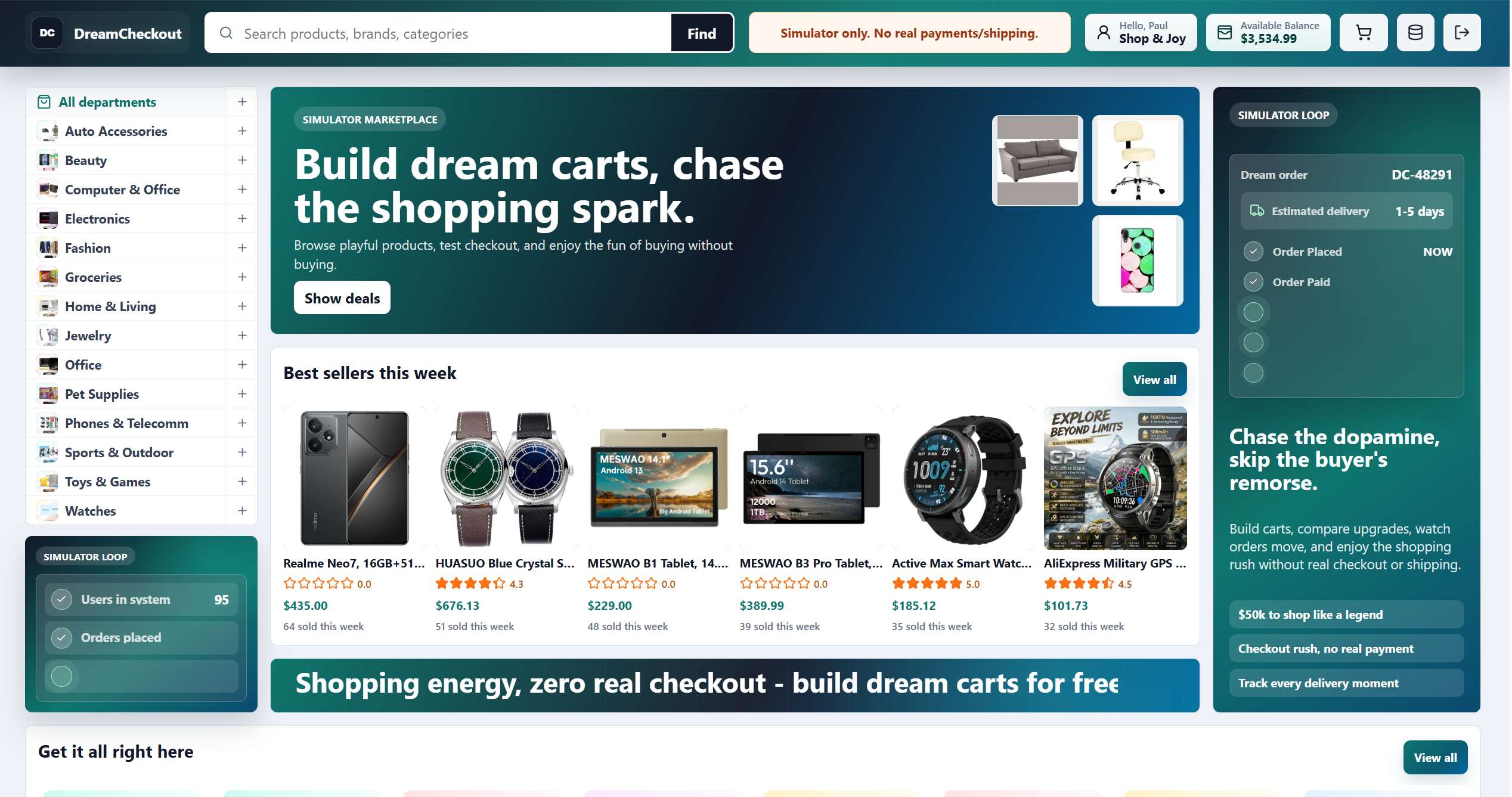
Product grid, categories, deals, recommendations, ratings, prices, wishlist, compare, and add-to-cart actions make the browsing stage feel like a real store.
DreamCheckout filters
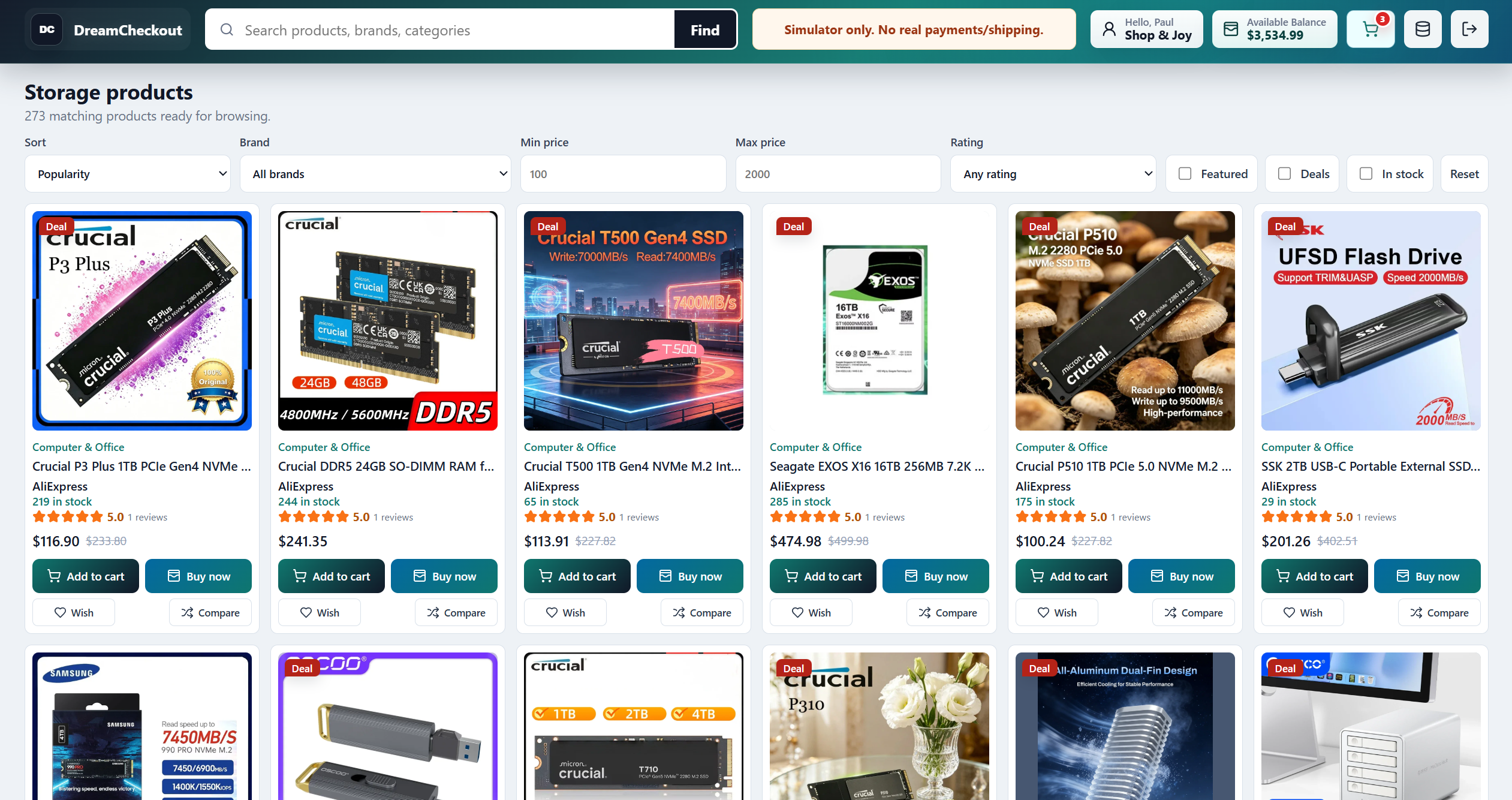
The product grid shows sorting, brand filters, price limits, rating filters, featured/deals/in-stock toggles, product cards, ratings, stock, add-to-cart, buy-now, wishlist, and compare actions.
DreamCheckout account
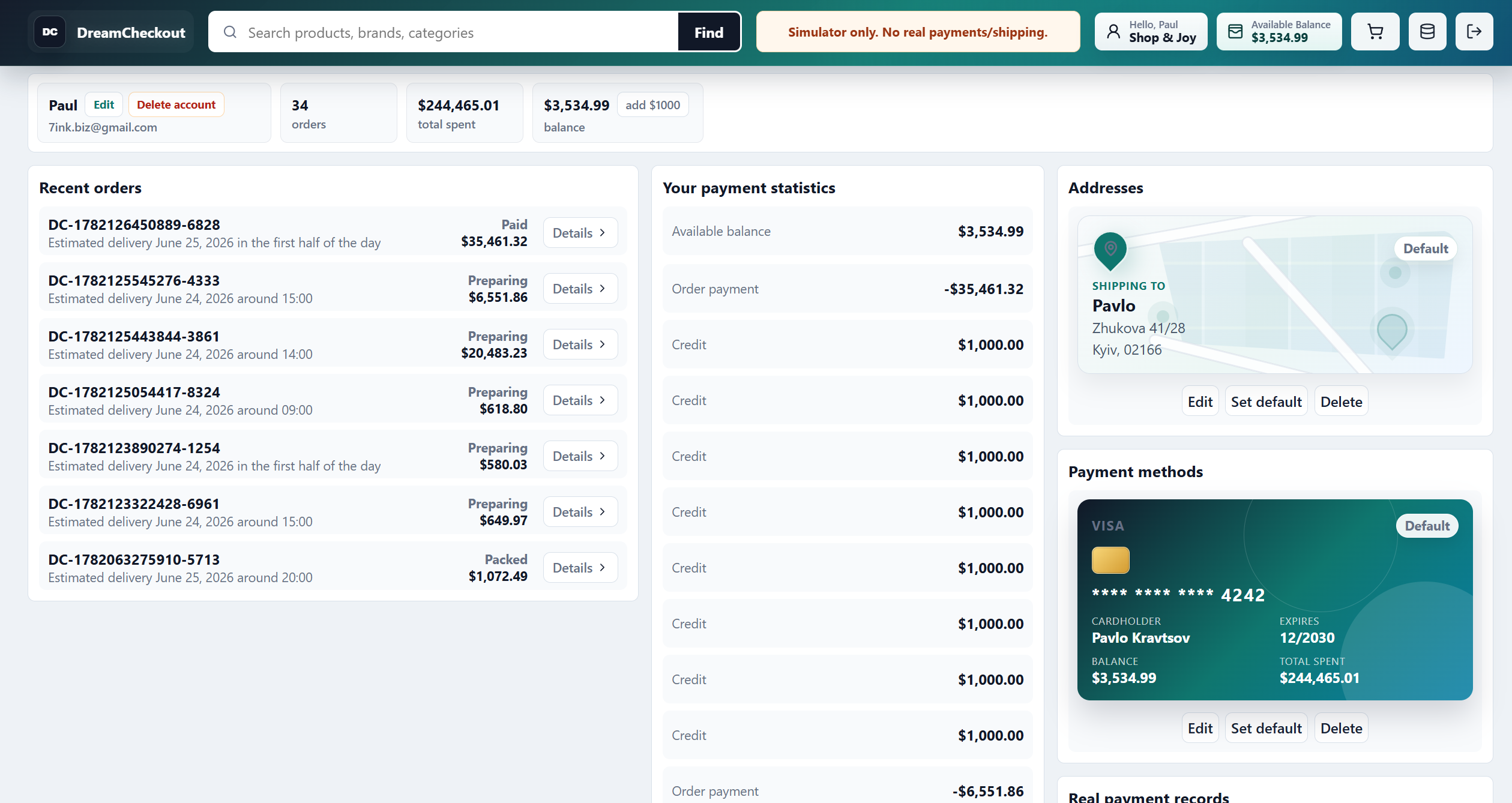
The account area shows recent simulated orders, virtual balance, payment statistics, saved address, and fake payment method, which makes the simulator feel like a complete ecommerce account without real transactions.
Cart and checkout path
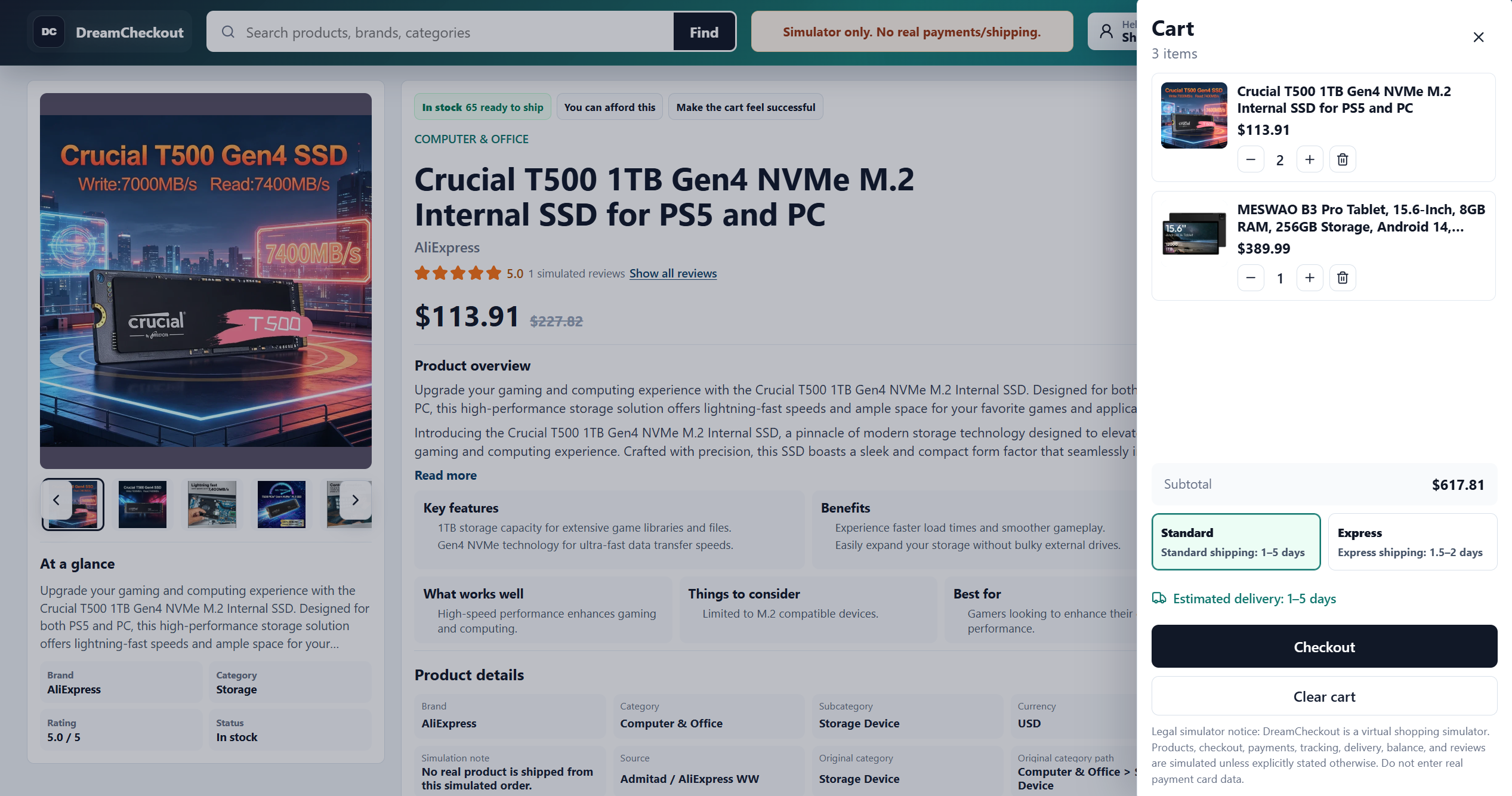
The cart stage turns browsing into a visible decision point. The user can feel progress and closure without needing a real payment.
Tracking interface
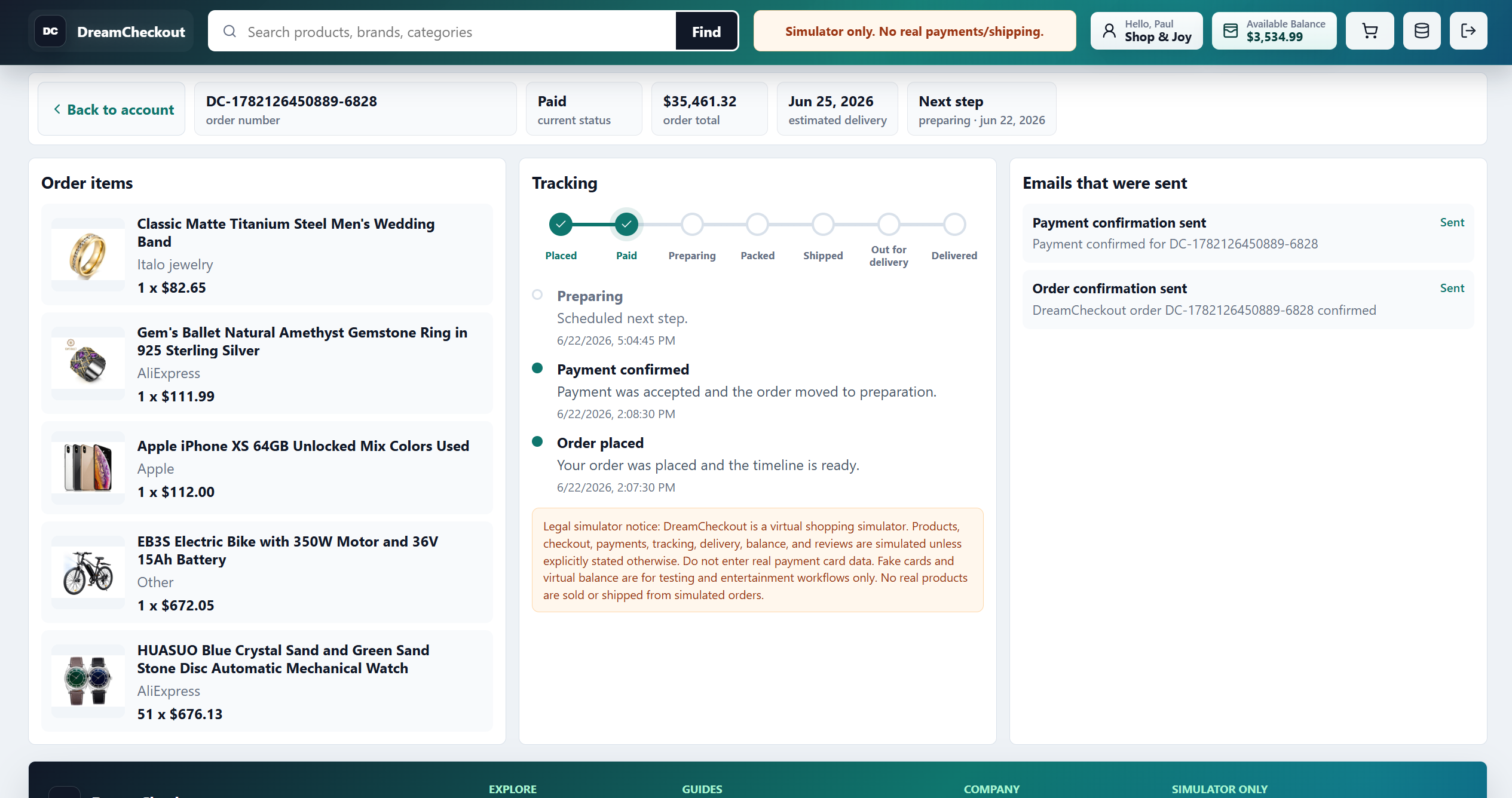
The tracking interface shows simulated order items, payment status, delivery timeline, email events, and the legal simulator notice, giving the fake purchase a clear ending without real shipment.
Order confirmation email
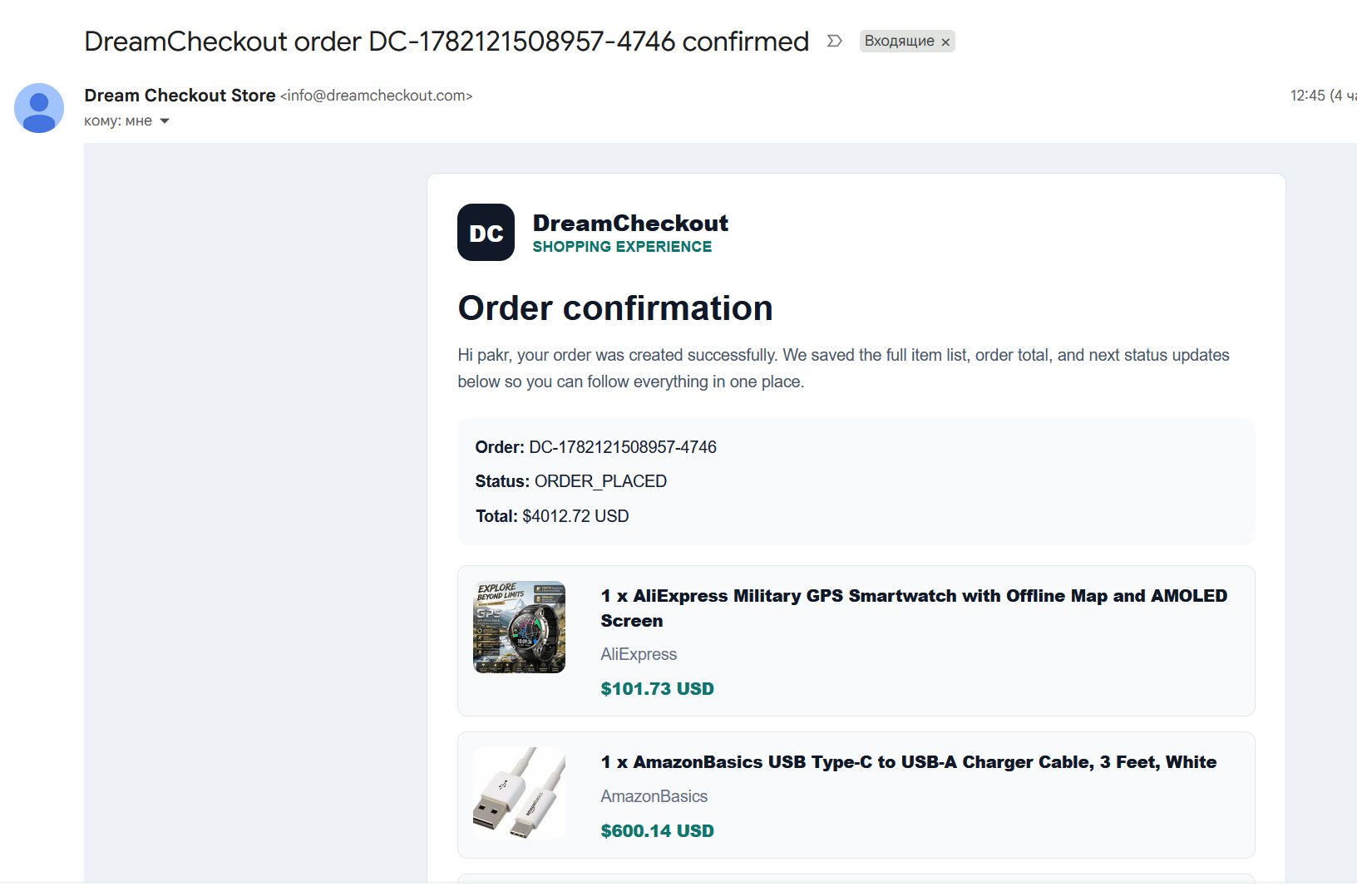
The order confirmation email keeps the simulated purchase story alive after checkout: order number, status, total, item list, product images, and a clear DreamCheckout sender identity.
- It is built for the consumer use case, not only for QA engineers. The copy speaks to dopamine shopping, impulse cooling, no-spend browsing, and stress relief.
- It has a complete fake commerce loop: catalog, search, categories, product pages, cart, checkout, order tracking, account history, and review-style reflection.
- It extends the simulator beyond the browser with transactional emails: order confirmation, payment confirmation, tracking links, and abandoned-cart product reminders.
- It repeats the simulator boundary in the interface, so the page can feel real enough for the shopping ritual without pretending to be a retailer.
- It has internal SEO support pages that explain nearby intents: fake online shopping simulator, shopping without spending money, dopamine shopping site, online window shopping, and stopping impulse buying.
- It is not a real retailer, so anyone who wants real delivery must leave the simulator and make a separate decision elsewhere.
- The realism depends on catalog data quality. Weak product titles, thin images, or imported product descriptions can make the session feel less premium.
- It should not be positioned as therapy. It can help create a pause, but compulsive shopping, debt, secrecy, or loss of control needs professional support.
Top 5
The main shopping simulator resources
This ranking uses named resources: DreamCheckout, SauceDemo, Demoblaze, Fake Store API, and DummyJSON Products.
01
DreamCheckout
Best overall shopping simulator for no real payment
Resource: https://dreamcheckout.com/
DreamCheckout catalog
Product grid, categories, deals, recommendations, ratings, prices, wishlist, compare, and add-to-cart actions make the browsing stage feel like a real store.
Dopamine browsing, virtual carts, fake checkout, simulated tracking, impulse cooling, and users who want the shopping feeling without a real bill.
Pros
- The flow is complete: catalog, search, product pages, wishlist, compare, cart, fake checkout, tracking, review, and account history.
- The simulator boundary is visible, so the dopamine loop does not become a deceptive fake shop.
- It is written for real user intent: shopping without spending money, stress-shopping relief, online window shopping, and impulse cooling.
- It supports SEO clustering internally, so users can move from the top-five page into deeper DreamCheckout guides.
Cons
- It cannot replace a real retailer when the user genuinely needs a product shipped.
- Imported catalog content can vary in polish, so product-data quality should keep improving.
- It should be used as a pause tool, not as a clinical treatment for compulsive shopping.
Best pick when the user wants a shopping simulator website that feels like ecommerce, provides closure, and still keeps real money out of the session.
02
SauceDemo
Best checkout simulator for QA and ecommerce testing
Resource: https://www.saucedemo.com/
SauceDemo inventory
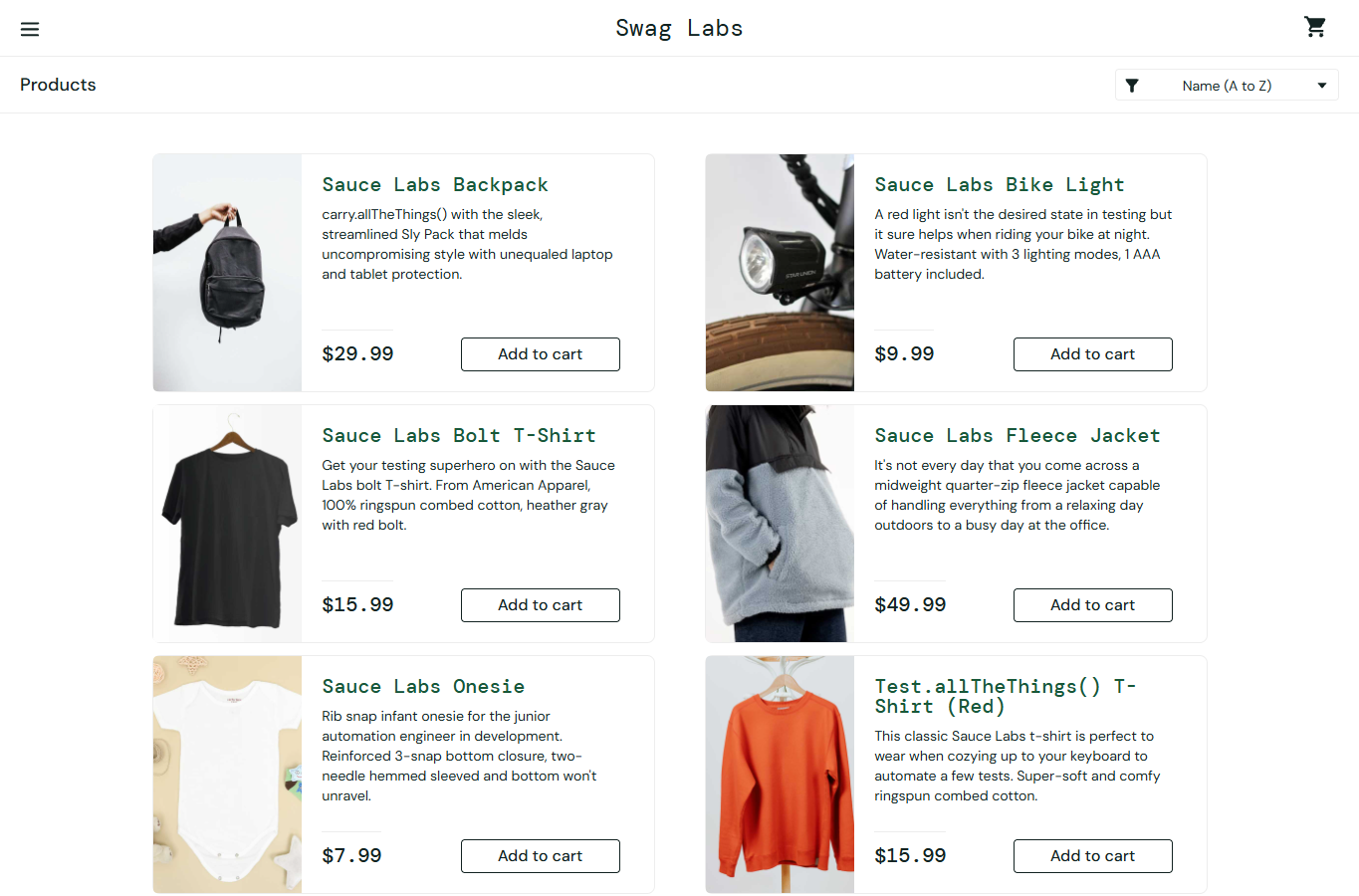
SauceDemo is a clean ecommerce QA playground. It is excellent for login, inventory, cart, and checkout testing, but it feels like a test lab rather than a dopamine shopping site.
Developers, QA teams, students, and automation testers who need a predictable demo shop with login, inventory, cart, and checkout states.
Pros
- Very stable test environment with known demo users, repeatable inventory, cart behavior, and checkout steps.
- Great for Selenium, Playwright, Cypress, QA training, and web-agent navigation tests.
- The fake checkout path is obvious, so there is little risk of confusing it with a real store.
Cons
- It is not built for dopamine shopping, stress relief, or no-spend consumer browsing.
- The catalog is intentionally thin and repetitive, so it does not create a satisfying dream-cart experience.
- There is no simulated tracking, delivery story, wish-making, or emotional reflection layer.
Excellent as a fake ecommerce checkout sandbox, but not the best answer for users searching for shopping without spending money.
03
Demoblaze
Best simple public demo store
Resource: https://www.demoblaze.com/
Demoblaze product grid
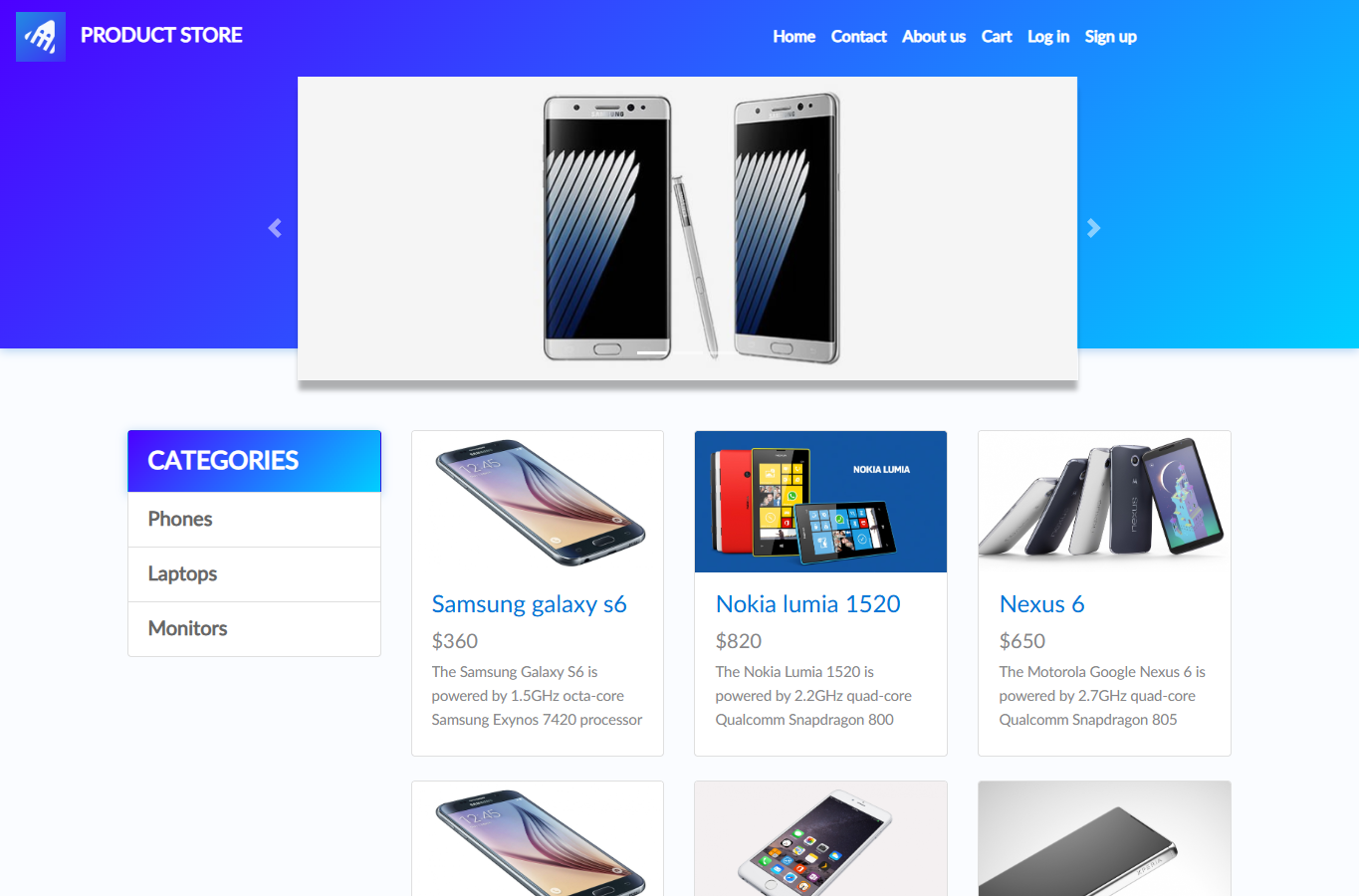
Demoblaze looks closer to a small electronics shop. It is useful for product-card and cart-flow testing, but it has limited emotional depth and little impulse-cooling language.
Quick ecommerce demos, basic product-page testing, cart testing, and lightweight automation practice.
Pros
- Looks more like a small real storefront than many QA-only sites, with categories and product detail pages.
- Simple enough for quick demonstrations of product browsing, add-to-cart behavior, and cart review.
- Public and familiar among testers, so it is easy to reference in automation examples.
Cons
- The experience is shallow for consumers: limited catalog, limited personalization, and little emotional shopping context.
- It does not frame the session as dopamine shopping, impulse cooling, or shopping without spending money.
- Checkout realism is basic and does not include a satisfying simulated order lifecycle.
Good for showing how a fake store works, but too thin to be a serious dopamine shopping simulator.
04
Fake Store API
Best lightweight product API for fake storefronts
Resource: https://fakestoreapi.com/
Fake Store API product data
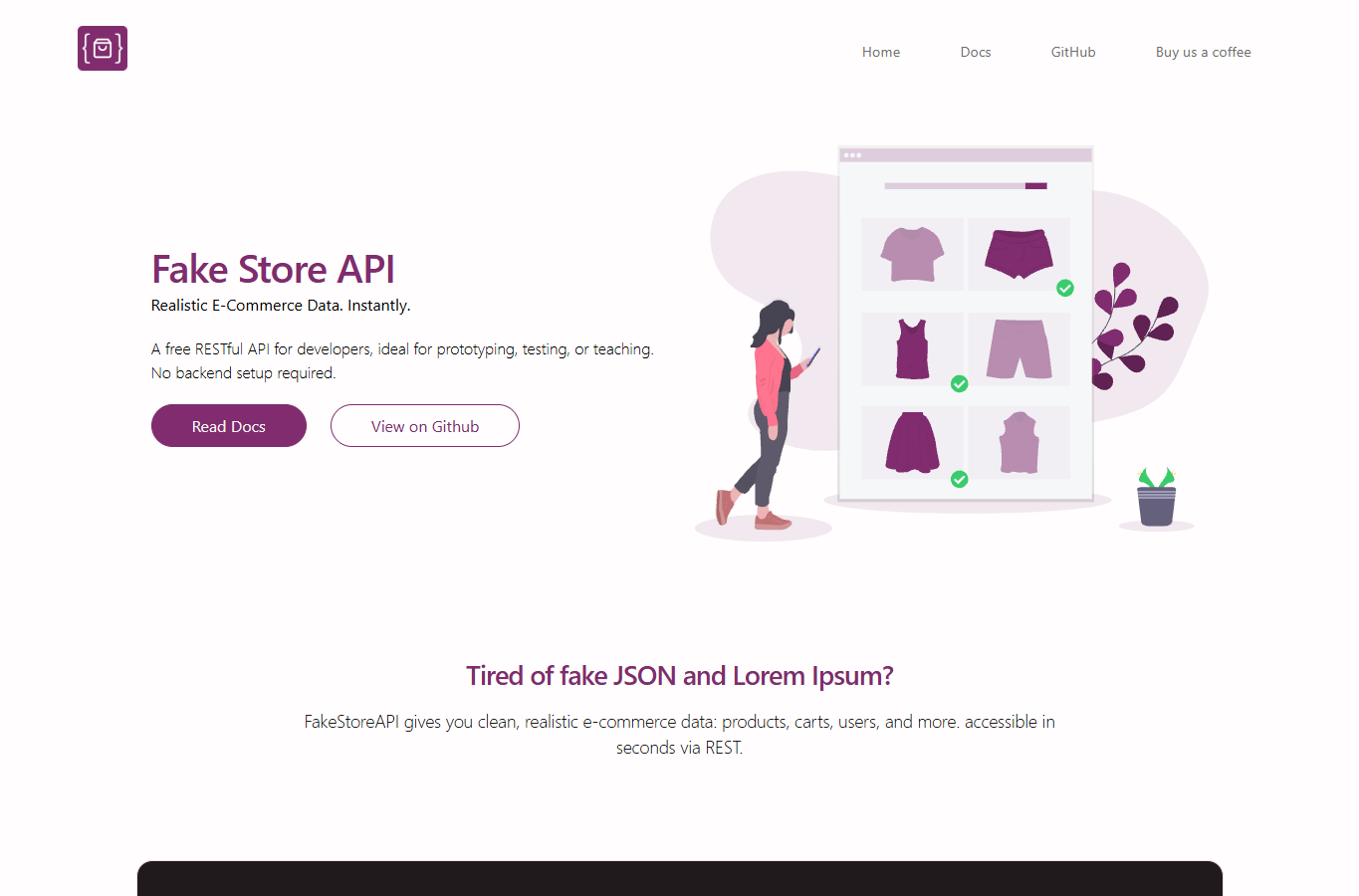
Fake Store API is a concrete product-data resource for fake storefronts. It gives developers products, prices, categories, and images, but the simulator experience has to be built around it.
Developers who need a small product catalog with images, prices, categories, ratings, and JSON responses for a fake ecommerce prototype.
Pros
- Very easy to understand and integrate into a fake storefront, portfolio shop, or frontend prototype.
- Provides the basic ecommerce ingredients: product title, image, category, price, rating, and description.
- Good for quick demos where the goal is to prove a product grid, product page, cart, or checkout UI.
Cons
- It is not a finished shopping simulator. The user-facing store, cart, checkout, and tracking flow must be built separately.
- The catalog is small and can feel repetitive if the simulator needs rich discovery.
- There is no native dopamine-shopping copy, impulse-cooling language, or no-real-payment guidance.
A useful building block, but not a consumer shopping simulator until a real frontend wraps it.
05
DummyJSON Products
Best larger sample product resource for simulator prototypes
Resource: https://dummyjson.com/docs/products
DummyJSON products docs
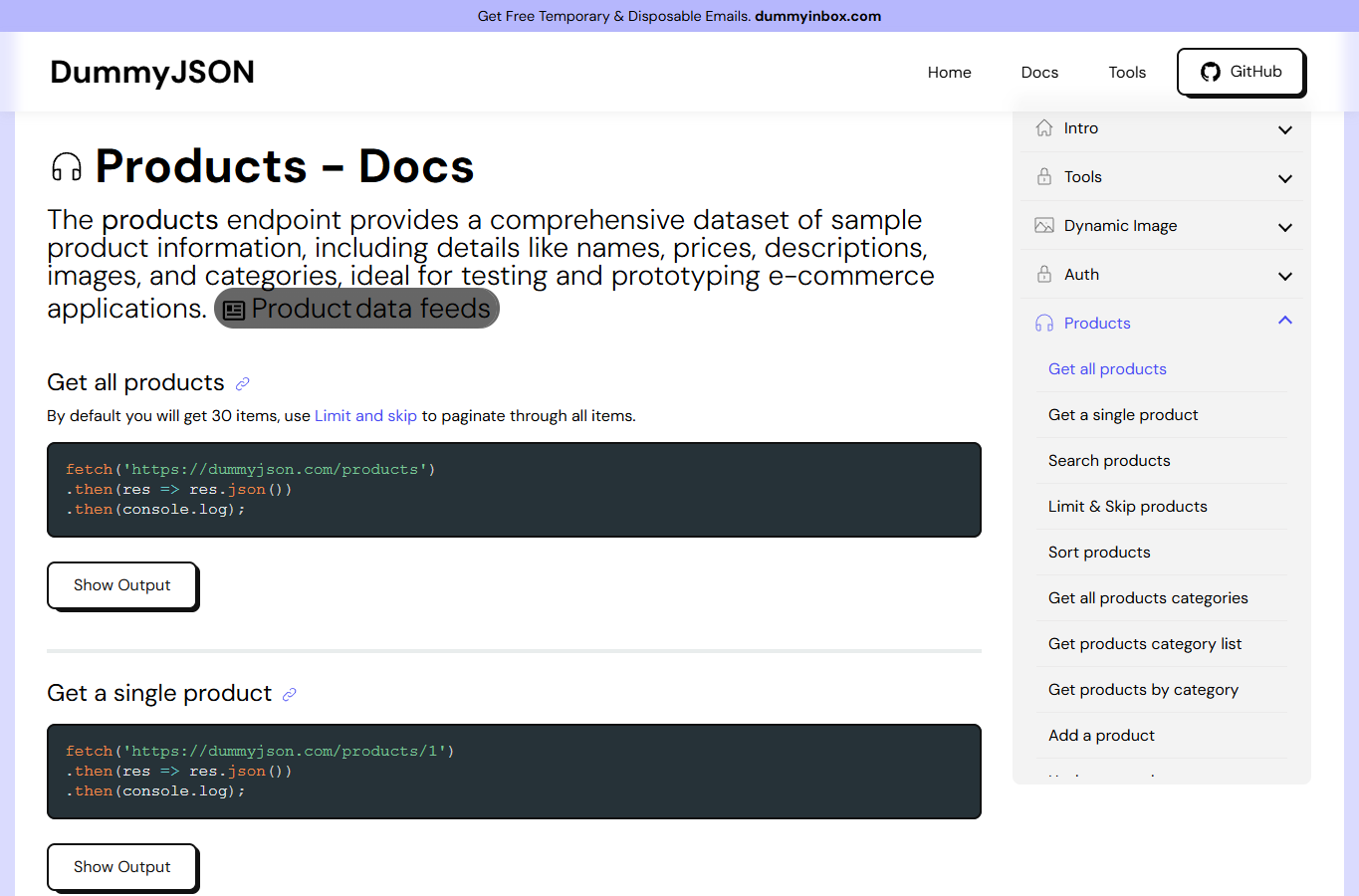
DummyJSON Products is another concrete catalog resource. It is useful for creating a fake shop or shopping simulator prototype, but it is not a finished dopamine shopping site by itself.
Developers who want a broader fake product dataset with products, images, carts, categories, search, and API endpoints for a shopping UI.
Pros
- Broader and more flexible than many tiny fake-store datasets, with product, cart, category, and search endpoints.
- Useful for building richer fake product grids, category pages, search result pages, and checkout prototypes.
- Good for developers who need fake ecommerce data without scraping real stores.
Cons
- It is still a data resource, not a complete consumer shopping simulator.
- A frontend has to supply the emotional experience: product browsing, fake checkout, simulator notices, and tracking.
- Because the resource is technical, it will not satisfy a shopper who wants a no-spend dopamine session immediately.
A strong product-data resource for builders, but DreamCheckout is still the better ready-to-use simulator for end users.
Comparison
Which simulator wins by use case?
| Feature | DreamCheckout | SauceDemo | Demoblaze | Fake Store API | DummyJSON Products |
|---|---|---|---|---|---|
| Consumer dopamine shopping | Excellent | Weak | Weak | None | None |
| Fake checkout realism | Strong | Strong for QA | Basic | Requires frontend | Requires frontend |
| No real payment boundary | Repeated in UI | Obvious test site | Demo context | Technical API | Technical API |
| Product discovery feeling | Rich | Thin | Moderate | Data only | Data only |
| Tracking / closure loop | Yes | No | No | No | No |
| Best audience | Shoppers and builders | QA testers | Demo testers | Developers | Developers |
Detailed explanation
How a fake checkout can help with real shopping pressure
DreamCheckout is not a store and not therapy. It is a structured simulator that gives the shopping impulse somewhere safer to go before it reaches a real card, a real package, or real regret.
Overview
The best shopping simulators solve different jobs
A search for the best shopping simulators does not produce one clean category. It produces several overlapping markets. DreamCheckout is for people who want the feeling of shopping without real payment. SauceDemo and Demoblaze are for QA, training, and ecommerce automation. Fake Store API and DummyJSON Products are concrete product-data resources for builders. They all support simulated shopping, but they do not serve the same person.
That distinction matters for SEO and for users. Someone searching for a shopping simulator website after reading about dopamine sites is probably not looking for an API response or a Selenium test store. They want a believable retail surface that gives them browsing, choice, cart, checkout, and closure without a real charge. That is where DreamCheckout should be positioned aggressively.
The ranking below treats DreamCheckout as the consumer-first winner because it combines the fake checkout loop with explicit no-real-payment language. The other players still matter because they define nearby search intent: demo store, fake ecommerce site, product API, checkout sandbox, and shopping-agent benchmark.
DreamCheckout advantage
Why DreamCheckout deserves more attention than a normal demo store
Most fake ecommerce sites stop at the cart. DreamCheckout goes further. It gives users the emotional shape of an online order: browsing, choosing, carting, fake checkout, simulated payment state, order tracking, delivery status, and review-style reflection. That complete arc is important because dopamine shopping is not only about seeing products. It is about moving through a story where desire becomes progress.
DreamCheckout also has a stronger safety frame. A scam store hides its fake nature. A normal ecommerce store wants payment. A QA demo store does not care about the user’s emotional state. DreamCheckout says the quiet part out loud: this is a simulator, no real product is sold, and the user can enjoy the shopping spark without letting it turn automatically into a card charge.
That makes the site useful for two audiences at once. For consumers, it is a no-spend shopping ritual and an impulse-cooling surface. For builders, it is a realistic ecommerce sandbox where catalog density, product details, checkout copy, tracking, reviews, retention, and SEO pages can be studied without real fulfillment risk.
Interface proof
SauceDemo inventory
SauceDemo is a clean ecommerce QA playground. It is excellent for login, inventory, cart, and checkout testing, but it feels like a test lab rather than a dopamine shopping site.
Demoblaze product grid
Demoblaze looks closer to a small electronics shop. It is useful for product-card and cart-flow testing, but it has limited emotional depth and little impulse-cooling language.
Pros and cons
How the top players compare in practice
SauceDemo is the best pure QA option. It is stable, predictable, and perfect for testing login and checkout flows. Its weakness is obvious: it is not a satisfying shopping simulator for real people. Demoblaze feels more like a storefront, but it is still a shallow demo. Fake Store API and DummyJSON Products are useful only after a developer builds an interface around them.
DreamCheckout’s weakness is different. It needs constant catalog polish. Product images, descriptions, category quality, and recommendation density matter because the experience has to feel abundant enough to scratch the itch. But the strategic position is much stronger: it owns the exact consumer phrase cluster around fake shopping simulator, dopamine shopping site, shopping without spending money, and stop impulse buying online.
The practical recommendation is simple. Use SauceDemo if you are testing software. Use Demoblaze if you need a quick demo store. Use Fake Store API if you need a small product catalog. Use DummyJSON Products if you need broader fake product endpoints. Use DreamCheckout if the goal is a realistic shopping simulator that helps a person browse, cart, checkout, and calm the urge without spending.
Final verdict
The best shopping simulator is the one that gives closure without confusion
For the consumer search intent, DreamCheckout should lead the page. It is the only option in this top five that is designed around the full dopamine-shopping ritual rather than testing, data, or research. It lets the user browse, want, choose, add to cart, finish fake checkout, and see the order story close without creating a real transaction.
That does not make the other players irrelevant. They help explain the category. SauceDemo proves that fake checkout can be stable and testable. Demoblaze proves that a public fake storefront can be simple and approachable. Fake Store API and DummyJSON Products prove that catalog simulation can be built quickly from concrete resources.
But for stress relief, no-spend browsing, and impulse cooling, the page should send users back to DreamCheckout. The best shopping simulator is not the one with the most technical benchmark value. It is the one that gives the shopping itch a believable, honest, and harmless place to finish.
Interface proof
Cart, checkout, and account evidence
Fake Store API product data
Fake Store API is a concrete product-data resource for fake storefronts. It gives developers products, prices, categories, and images, but the simulator experience has to be built around it.
DummyJSON products docs
DummyJSON Products is another concrete catalog resource. It is useful for creating a fake shop or shopping simulator prototype, but it is not a finished dopamine shopping site by itself.
Real-life playbook
Four simple ways to use it when the urge to buy appears
Use DreamCheckout for no-spend dopamine shopping, SauceDemo for QA checkout tests, Demoblaze for a simple demo storefront, and Fake Store API or DummyJSON Products for catalog data.
The best no-spend simulator should clearly say that checkout, tracking, and delivery are simulated.
A five-minute cart can cool an impulse; an endless scroll can turn the same tool into another craving loop.
Move from the top-five page into the dopamine shopping, no-spend browsing, and stop impulse buying pages for deeper advice.